
When people talk about investing, the conversation usually revolves around numbers.
Which fund delivered the highest returns?
Which category performed the best?
Should you invest now or wait for the market to correct?
While these are important questions, they overlook something even more powerful.
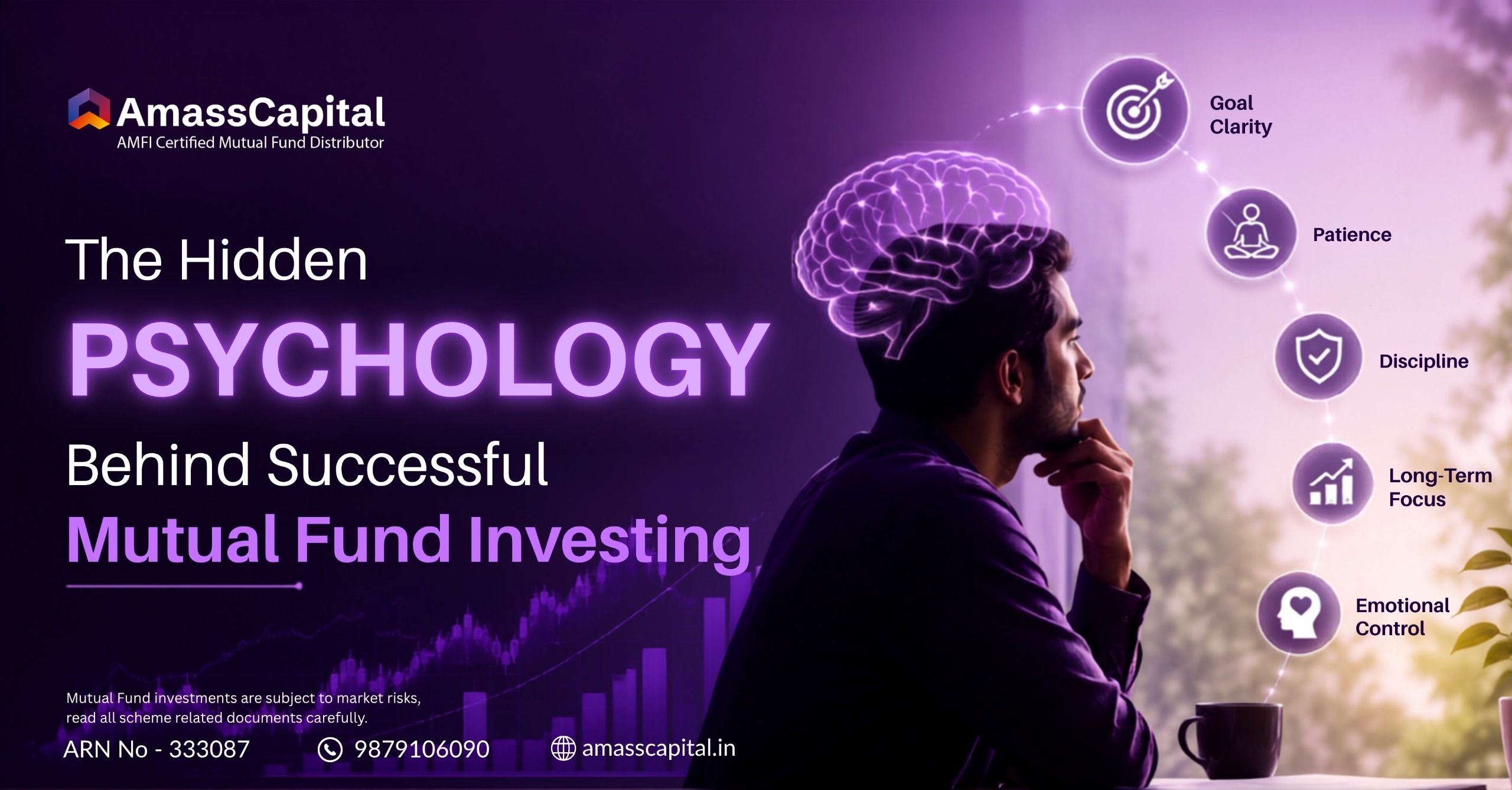
Successful investing is less about choosing the perfect mutual fund and more about managing your own behaviour.
The biggest difference between investors who build wealth over decades and those who constantly struggle is often not knowledge its psychology.
Understanding how emotions influence financial decisions can help you make better choices and stay committed to your long-term goals.
Why Investing Is More Emotional Than We Think
Imagine two investors who invest in the same mutual fund on the same day.
Both have similar incomes.
Both have the same financial goals.
After a few months, the market falls.
One investor continues investing every month.
The other stops investing because they fear losing money.
Ten years later, their investment outcomes are very different.
Why?
It wasn’t because they selected different funds.
It was because they responded differently to uncertainty.
This is one of the biggest lessons in Mutual Fund Investments:
Your behaviour often has a greater impact on your wealth than market movements.
Fear Is the Biggest Wealth Destroyer
Market volatility is normal.
Every investor experiences periods when markets rise sharply and periods when they decline.
Unfortunately, many investors make decisions based on emotions instead of long-term planning.
When markets rise, people often invest because everyone else is investing.
When markets fall, they stop investing because everyone else is worried.
This cycle repeats itself.
Successful investors learn to separate emotions from decisions.
Instead of reacting to every headline, they focus on their financial plan.
Why Patience Is an Investment Skill
We live in a world where everything happens instantly.
Food arrives in minutes.
Movies stream immediately.
Payments happen in seconds.
Naturally, many people expect investments to work the same way.
But wealth creation doesn’t follow the same timeline.
Long-term Mutual Fund Investment in India has shown that markets reward patience more often than prediction.
Compounding needs time.
A well-planned investment strategy cannot deliver its full potential in a few months.
It grows gradually through consistency and discipline.
The Psychology of Starting Early
Many people delay investing because they think:
“I’ll start when I earn more.”
“I’ll begin next year.”
“I’ll wait until the market becomes stable.”
The truth is, waiting often becomes a habit.
Starting early is not about investing a large amount.
It’s about giving your investments more time to grow.
Even small monthly investments can become meaningful over the long term because compounding rewards consistency more than size.
This is one reason mutual funds investment plans for beginners have become increasingly popular.
They allow new investors to begin with manageable amounts while developing disciplined investing habits.
Why SIP Helps Control Emotions
One of the biggest advantages of investing through a Systematic Investment Plan (SIP) is that it reduces emotional decision-making.
Instead of wondering every month whether today is the right day to invest, SIP automates the process.
This creates consistency.
It also helps investors avoid two common mistakes:
- Waiting endlessly for the “perfect” market.
- Investing emotionally after markets have already risen significantly.
If you’re wondering How to invest in SIP, the first step isn’t choosing the highest-return fund.
The first step is deciding to invest regularly, regardless of short-term market movements.
That’s where long-term wealth creation begins.
Comparison Is Another Investing Trap
Social media has made investing more visible than ever.
Every day, investors see headlines like:
- “This fund delivered 30% returns.”
- “This stock doubled in one year.”
- “Top-performing investment of the year.”
While these stories attract attention, they also create unrealistic expectations.
Successful investing is not about outperforming everyone else.
It is about achieving your own financial goals.
Your investment journey should be based on your:
- Income
- Responsibilities
- Risk tolerance
- Time horizon
- Financial objectives
Comparing your portfolio with someone else’s often leads to unnecessary changes that may not benefit your long-term plan.
Discipline Beats Intelligence
Many people assume successful investors are financial experts.
In reality, disciplined investors often outperform highly emotional investors.
You don’t need to predict markets every week.
You don’t need to follow every financial headline.
You simply need to stay committed to a well-planned investment strategy.
The most successful investors usually share three habits:
- They invest consistently.
- They review their goals periodically.
- They avoid making impulsive decisions during market volatility.
These habits matter more than constantly chasing the next opportunity.
Investing Should Match Your Life, Not the Market
Markets will always change.
Your life will too.
Marriage.
Children.
Career changes.
Retirement planning.
Each stage brings new financial priorities.
This is why your investment strategy should evolve with your goals rather than market sentiment.
The best investment is not always the one generating the highest return.
It is the one that helps you achieve the future you are planning for.
How Amass Capital Helps Investors Stay Focused
At AmassCapital, we believe investing is not just about selecting mutual funds.
It is about helping investors make confident, informed, and emotionally balanced decisions.
Our approach focuses on:
Goal-Based Planning
Every investment should support a specific financial objective.
Disciplined Investing
We encourage long-term consistency rather than short-term reactions.
Personalized Guidance
Every investor has different priorities, and investment strategies should reflect those differences.
Continuous Support
Markets change, life changes, and your financial plan should adapt accordingly.
Rather than chasing trends, we help investors build habits that support sustainable wealth creation.
Final Thoughts
The biggest challenge in investing is rarely the market.
More often, it is our own emotions.
Fear encourages us to stop investing.
Excitement encourages us to chase returns.
Comparison pushes us to change strategies too often.
Successful Mutual Fund Investments are built on something much simpler:
- Patience
- Discipline
- Consistency
- Long-term thinking
If you’re beginning your journey into Mutual Fund Investment in India, remember that the smartest investment decision isn’t always about choosing the perfect fund.
It’s about creating the right mindset.
Whether you’re exploring mutual funds investment plans for beginners or learning How to invest in SIP, staying committed to your financial goals will always matter more than reacting to short-term market noise.
At AmassCapital, we’re here to help you invest with clarity, confidence, and a long-term perspective because building wealth starts with building the right investing habits.
About the Author:
This content is created by Amass Capital’s research team, combining over 15 years of market experience with a deep understanding of global trade impacts on Indian markets.
Disclaimer:
This article is for educational purposes only and should not be considered as personalized investment advice. Please consult with qualified financial advisors before making investment decisions.
